Tag Archives: business

in memoriam ludorum: Entros

Cartoon gravestone pictureThis site announces a new, infrequent, irregular series about some of the most interesting games of yesteryear, for fear that they are forgotten for good. The title in memoriam ludorum hopefully works better than the alternative Game but not forgotten.

Entros was a restaurant in Seattle, and later San Francisco, for most of the 1990s. It was distinctive for offering imaginative games along with the food, on a scale sufficiently grand and with equipment sufficiently advanced that a dedicated centre was necessary to house them. At a basic level, you could pull up to the bar and have some fairly familiar fare accompany your food and drink: Boggle, backgammon, card games, or pen-and-paper puzzles. However, for a few dollars more, you could get a sticker to get you access to the six or so big games, rotated once or twice a year, and these big games were about as imaginitve and exciting as it got – arguably, among the most progressive games made available to the public of all time.

Peter Sarrett, a fixture of the Seattle game and puzzle community, wrote a juicy, love-laden tribute to the big games on offer in his wonderful old board game printed ‘zine. Sadly the publication is no more and the URL (gamereport.com) of the archive site was far too good not to be snapped up, but happily archive.org has a saved copy. The article is a must-read, but here are some of the most interesting parts to whet your appetite:

“The office is quiet – perhaps too quiet. My companion and I quickly speak into our headsets, describing our surroundings to our partners tucked away in a remote control booth. Cross-checking our descriptions with their information, they tell us to search the bookcase. Sure enough, we find a hidden latch and open a secret door to a darkened room. There, on an illuminated pedestal in the far corner, is our prize- a valuable statue stolen from the art museum. My companion starts to move for it, but I hold him back just in time and point to the floor, an ominous black grid of unusual symbols. Sure enough, our partners tell us it’s rigged to an alarm, but they can guide us through it safely.

We scan franticly for the safe symbols they describe, using them as our stepping stones toward the statue. Halfway through we seem stranded, unable to find a nearby safe square. We shout into our headsets, panic rising, until my companion shouts triumphantly and points to a safe spot. But we’ve taken too long now and we’re out of time. A klaxon wails and the room floods with light, and we’re escorted politely but firmly from the room. Caught. Undaunted, we get back in line for another try.

[…]

After dinner a tantalizing array of activities await. Designed by on-staff gamemakers, these activities aren’t about virtual reality or man vs. machine. They’re about people interacting with each other cooperatively and competitively. Take Interface, for example – Entros’ longest-running game. One player wears a blinding helmet with a front-mounted video camera which sends an image to her monitoring partner. That partner talks the “operative” through a series of activities through a two-way radio link, racing against the clock in a high-tech trust walk. Three different sets of activities exist so players can swap roles and still get a fresh experience.

[…]

The first time I visited Entros they were running a multimedia odyssey called The Forever Formula which contained a puzzle sequence which remains my favorite. As we entered the building, we passed by a telescope mounted on a tripod in the lobby. It seemed an usual bit of decoration, but we forgot all about it as we entered the restaurant through the fake phone booths, humming the Get Smart theme song. During the game, a clue suggested that we look between the pillars of Stonehenge. We remembered that a stone arch was painted on the glass of the building’s front door, so we returned to the lobby. Sure enough, when we aimed at the painted icon we could see through the telescope the magnified image of a small sign mounted on a building across the street. The sign said something like, “For your next clue, call the Kremlin.” As it happened, a pay phone sat just a few feet from the telescope. Dropping a quarter, we dialed K-R-E-M-L-I-N and got a recording of a man with a Russian accent directing us to our next stop.”

It’s not clear why Entros went under (and the eight or so years it had are far from a bad run) though this site notes that a 1998 review noted that “Given the heady nature and price tag of an Entros visit – about $75 per person – Entros tends to attract a well-educated clientele” and that the closure happened at about the same time as the first dotcom crash. Or perhaps the games were great but the restaurant half of the business didn’t pull its weight; the food is discussed in this 1994 review. Maybe the whole prospect was just ahead of its time and the mainstream nature of exit games shows that the market is prepared to accept brainier, gamier fare now than it was half a generation ago.

The games are still offered by Forrest-Pruzan Creative, a company with many former Entros employees working for it, and were seen in the wild at the Pacific Science Center in late 2010, and perhaps since. This list has details of all the games on offer, and we can but dream about playing them. To show just how old-school the list is, most of the games have videos available… but to see them, you’ll need to dig out RealPlayer!

(Reminiscences from people who were actually there at the time would be most welcome, especially if people can place them in the context of the games and puzzles that have followed it. This site’s writers live eight timezones away, as well as years too late, but can tell when they’ve missed a treat.)

Twists in the tale

Mobius strip graphicA little research last night pointed to one of the more interesting and controversial events in English-language exit game history: the ending of Real Escape Game 3: Real Escape Game x Evangelion in San Francisco in September 2012. This was a one-time event held over the course of a weekend. While the company behind it, SCRAP Entertainment Inc., have rerun some of their games in different cities across North America – not just San Francisco, but Los Angeles, New York City and Toronto – there are no signs of this one being repeated, so it’s probably fair game for discussion. (As well as interesting.)

A quick distinction: the same company have run these limited-duration event games several times, usually each lasting a few days or a week, but they also run Real Escape Room games at weekends and on weekday evenings on a long-term basis, which take the usual exit game format. The Real Escape Game can be much looser in scope, with many teams occupying the same physical space at once, working in parallel. In Real Escape Game x Evangelion, as the “Unwinnable” report puts it,

Sunday’s EVA event was “Mystery Hunt Style,” meaning the game’s already cryptic clues had been scattered all over Japantown. As players, we had to split our time between mentally arriving at solutions and physically arriving at solutions, and an hour of that can take a lot out of you.

Reaction to the majority of the game appears to be generally pretty positive, and certainly the company has gone on to run many more, similarly popular, English-language games after it; they’ve run games in so many countries, too, that I hold out hope that they might come to the UK some day, which would likely be a real treat.

Now the big twist came at the end of the game. People have been kind enough not to spoil the specifics, but the report linked to above later goes on to describe it, taking a similar tone to this report on an Evangelion fan site and Tyler Hinman’s no-punches-pulled report. Essentially, while only around 10% of teams solved all the puzzles over the course of the hour, the game had an extra step that was necessary for official victory, knocking the success rate down to around 2%. Some otherwise victorious teams considered this extra step to be unfair, or not properly clued, or otherwise not in the expected spirit. Some have made comparisons to the Japanese video game ethic of games having multiple endings; arguably this is fairer game if it is expected.

So here’s another thought. Suppose you and your team went to play an exit game. You had played a few before – won some, lost others, but were particularly attracted by this one, which happened to be clearly marked as being intended for those who had played other games before, rather than as an introduction to the genre.

You enjoy solving your way through many steps and reach what appears to be the final puzzle… then, at the last minute, there’s one unexpected step, and instead of the team winning or losing as a team, it becomes clear that the game will only permit one person to win, with all the rest of the team losing. Perhaps there is a single competitive puzzle to be completed individually to determine who gets the honour among the team. (Any metaphor is possible – perhaps you’re trying to land a spaceship safely before it runs out of its last hour of fuel, but no matter how close you get to a safe landing, you’re going to have to bail out… and there’s only room for one in the escape pod. Something like that.) You’re requested not to spoil this twist ending to other players, and the player photos don’t give it away.

Would that be fun, or would that leave a sour taste in the mouth?

You are not alone

A scroll and some actorsOne factor that seems to apply to many exit games is that the team playing them are in the room, alone except for contact with the outside world that may be supplying hints, whether by walkie-talkie, over a loudspeaker, onto a screen or by some other approach.

This solitude needn’t absolutely be the case; in the US, the Trapped In A Room With A Zombie series of games features a real live acted undead zombie in each room, chained to the wall. Every five minutes, the zombie’s chain is extended another foot so that they might have extra shambling radius. If the zombie touches you, you are… not eliminated from the game outright (that wouldn’t be fun, considering you’ve paid for the ticket) but have to sit down, rooted to the spot, and can only communicate verbally with the rest of your team.

This site is not aware of any UK exit game sites currently looking to increase their regular “fully manned” staffing levels. However, an exit game could be distinctive if it were to feature actors or other characters to interact with as part of playing the room. Yes, the cost of labour is expensive. (TIARWAZ, referred to above, has teams of 12 playing at any one time.) It might be possible for a single site with multiple games to contrive some sort of solution, though, with actors who are present at certain points of the game but not others.

One approach could be for these intermittent actors not to physically appear in the same space as the teams, though still to be available at certain points for crucial interaction. Could a game master from another game also act as a character when they happen not to be running a game or performing setup between games? Could it be possible to contrive a reason for a game master to be out of contact temporarily, while they are acting as a character in another game?

Another approach could be for one actor to play a variety of different roles (or play several simultaneous versions of the same character), dipping in and out of several games as appropriate. The entrances and exits would have to be very carefully handled in order not to disrupt the “exit the room” metaphor – there would have to be very convincing reason why an actor could get in or out of the room but the team could not use the same route in order to do so.

A real mind game would be to play fast and loose with the concept of a single permanent benign game master per group. For instance, you might interact with your game master for 80% of the hour in one way – then the game master might physically intrude into the game and interact with you in a different fashion for the rest of the game. Perhaps a game master from another game might continue to act as master for the last few minutes of your game, while you interact with this compromised game master as part of the game.

So many things that could be done, and this is surely only scratching the surface. Wouldn’t be cheap, but surely would be distinctive and memorable!

The League Table: end of May 2014

Picture of a generic trophyThis is the second installment of an occasional feature to act as a status report on the exit games in the UK. On its own it means little, but repeated sufficiently many times it could be the basis of a survey of growth over time.

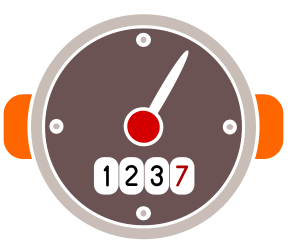
Exit Game sites known to have opened in the UK/Ireland: 12/1
Exit Game sites known to be open in the UK/Ireland: 11/1
Exit Game sites known to have closed temporarily in the UK/Ireland: 1/0
Exit Game sites known to have closed permanently in the UK/Ireland: 0/0
Exit Game sites known to be under construction in the UK/Ireland: 3/0
Exit Game sites less confidently known to be under construction in the UK/Ireland: 3/0

Site name Number of exit rooms Number of different games Number of TripAdvisor reviews Number of 5/5 TripAdvisor reviews Local TripAdvisor ranking
Breakout Manchester 1 1 4 4 62
clueQuest 3 2 426 411 1
Cipher 1 1 – – –
Cryptopia 1 1 24 21 9
Escape 2 1 7 7 81
ESCAP3D 1 1 73 62 3
Ex(c)iting Game 2 2 17 12 22
HintHunt 5 2 805 748 3
Keyhunter 3 3 38 25 6
Make A Break 1 1 22 15 12
Tick Tock Unlock 1 1 9 9 19
Puzzlair 2 2 36 36 2
XIT 4 4 3 2 101

This needs to be taken with a heavy pinch of salt. This site supports all the exit games that exist and will not make claims that any particular one is superior to any other particular one. Please note that the TripAdvisor rankings represent a wide variety of locations and cannot be directly compared against each other. In fact, it’s probably pushing it even to compare the tripAdvisor rankings of two exit game sites in the same city. One site has received four ratings over the course of the month, all 5/5, and has promptly dropped six places within its city. Seems strange; what more might it do?

Updating our estimate as to how many people have played an exit game in the UK or Ireland, we will revise our prior estimate for the number of people by the end of April 2014 up to 34,000 and the estimate for the number of people by the end of May 2014 up to 39,000. (As usual, this is not a confident estimate, but should be correct to within a factor of three.) The expansion of HintHunt from four rooms to five at the start of June is likely to have a reasonably large effect in future months.

Coming back for more

Picture of an illustrated story bookA follow-up question to that of how popular exit games are is the issue of how to get players to come back for more, for repeat business may well play a significant part in keeping a site thriving over time. It may be easier to convince someone to play an exit game if they know what one is from having played one already.

Some sites offer more than one different room, which seems likely to be a lucrative move. Perhaps someone who enjoys one room at a site can be convinced that another room at the same site is likely to be of a similarly high quality; there will always be people for whom the novelty of playing an exit game once is sufficient, but there will also always be enthusiasts who are keen to get the joy of an exit game as many times as possible. Many sites say that they change their rooms from time to time, though this represents a considerable investment.

It has also been suggested that it’s difficult to tell much of a story within an hour. It’s tempting to wonder – asking in the context of a theorist, rather than someone with experience in the business – whether it might be possible to run a campaign of connected exit room games, at a single site, telling an extended story within the same universe. If someone enjoys a game, they might well be tempted to go back for the next episode, and the episode after that, and so on. Theoretically, it might even possible to permit the players to affect their ongoing story, with choices they make when playing an early episode having an effect on their experience in later episodes.

One model has people, when they book to play, specifying if they have played any episodes in the series previously, then the room is dressed in a slightly different way according to which part of the story happens next. This requires great communication between the players and the room dresser, for if players miscommunicate their needs then they may end up playing the wrong game (and possibly feeling aggrieved about it, even if it’s their own fault). Another downside is that it would probably be impractical to have different physical attributes of the room for each episode, unless a much bigger physical room is built and not all of it is used in each episode. This seems likely to be needlessly expensive.

Perhaps a workable solution would be to have several story episodes in a connected universe that can be played in any order, or story developments that can be caught up through narrative as well as through gameplay. (It’s easy to imagine a team of four coming for the first episode, then only three of them coming for the second episode, then a slightly different four for the third episode, and so on.) To be fair, this seems to be the approach taken by at least one site already.

It’s a considerable additional level of complication to consider, but one that potentially could multiply a site’s revenue several times without the expense of having to find new players over and over again…

How popular are exit games?

Counter graphicAn open question, possibly of interest, asks just how popular the exit games of the UK and Ireland are. This site has attempted to estimate the number of people who have ever played any of the exit games that we cover, and will attempt to update its estimates over time.

The alpha-version methodology this site proposes to use, and criticism is most welcome, is to attempt to estimate the number of teams that have played over time at each exit game site in the UK and Ireland, then from there to estimate the number of players. Estimating the number of teams relies on a number of sources of data. Some sites have quoted numbers of teams or players having taken part, which may or may not be taken at face value. At least one site appears to have past booking information still available, which may not be deliberate but certainly is extremely helpful (though, again, may not represent the full picture, depending on how phone bookings interlace with online ones).

As for the rest, the estimate (stress, estimate!) can be based on the number of rooms at each site, the apparent occupancy rate of each room according to booking data, but also data such as social media data regarding posts of game results, alongside more nebulous data (treated rather more lightly) such as numbers of Facebook likes and TripAdvisor reviews. This is not a rigorous approach but may be adequate for an extremely rough estimate.

After estimating the number of teams, we can attempt to estimate a number of players. It seems reasonable to take pictures posted to social media as a reasonably representative sample of actual team sizes at that site, noting that different sites (and even different games at a site) have different rules about the number of players per team. From there, it is worth applying a correcting factor to take account of the proportion of players who will have played more than one exit game, whether two (or more!) rooms at the same site, or at two (or more!) different sites.

Possibly the lessons to be drawn from this are that the two London sites appear to be doing excellent business, particularly with their recent expansions to 4 and 3 rooms (and both have further expansions soon planned!), and that there is not yet the evidence to support any of the sites outside London doing nearly so well – though only one site outside London has yet reached its first birthday, and surely the business models have not relied on the sites being instant hits. It can probably also be interpreted that the existing sites have only scratched the surface of potential players, and there are perhaps between a hundred and a thousand times as many potential players as yet-achieved players.

This site estimates the number of people to have played an exit game in the UK and Ireland by the end of April 2014 to be around 33,000. This site is not at all confident in this estimate, to the point where it could well be one third of that, or could be three times as high. That’s not too inconvenient – this site can at least be confident in saying “probably in the tens of thousands”!

(This site would be keen to discuss and improve its methodology, especially if any additional data that can be provided in confidence for authentication, but chooses to keep its estimates for individual sites and individual time periods to itself.)

Approaches to difficulty in exit games

GameCamp logoYesterday, at GameCamp in London, there was a talk on the exit game phenomenon given by Adrian Hon. It’s not clear what GameCamp etiquette is, whether what gets said at GameCamp stays at GameCamp, whether things can be reported under the Chatham House Rule, or whether there can be wider reports, but it would be great to hear more from the event. Failing that, Adrian discussed the genre towards the end of episode 41 of “The Cultures” podcast.

Some exit games take the approach that they will be very generous with the distribution of hints to their players, even making it clear that this is the policy right at the outset, in the discussion before players enter the room. As this was the approach taken by the first exit room site to open in the UK, this may well be the dominant approach nationally.

By contrast, there are other sites which offer some games where few or no clues are offered. The pitfall there is either that you set the difficulty level relatively high and have no or very few people crack the room, or you set the difficulty level relatively low and risk having people finish the game in less than half the permitted time, which can be something of a flat ending. There are plenty of other solutions, especially if players are prepared to enjoy the possibility of partial credit for solving some, but not all, of the game, but these appear to be less frequent.

Incidentally, the “deliberately very few winners” approach is the one taken by many of the games offered by SCRAP, considered the originators of the genre, among other operators. Befitting the Japanese origins of the “Nintendo hard” stereotype, as an example, their “What is the Real Escape Game?” page talks of a 2% success rate, and their Flickr photostream has a couple of photos of ongoing scoreboards suggesting victory rates not much higher than that. (Anecdotally, more recent games suggest an easing of standards to around 10%.) This site is not yet aware of any UK exit games that take quite such an extreme approach.

The issue of difficulty of exit games is an open one; there appears not to be a consensus on a single correct approach. As different players want to face different challenges, this variety of approaches may well be a good thing for the world. The difficulty is to match potential players up to the right game for them. This web site will do whatever it can to help in this regard.

The Keyhunter site in Birmingham takes a particularly interesting approach in this regard; it advertises its three games as having different levels of difficulty, and advertises its teams successes on social media not only in terms of the time they took but also by how many clues were needed. If you want the added challenge of completing an exit room and having “with 0 hints used” decorating your performance, perhaps Keyhunter might be the right site for you. There may well be other games that offer the same option and this site will make it clear when it’s available.

Mazebase, the company behind two UK exit rooms

Mazebase game logopuzzlair3
Yesterday’s post, about discovering the existence of Puzzlair, came about as a result of finding out that Mazebase existed. Mazebase are the company who designed HintHunt in London and Puzzlair in Bristol, and also have a room in Debrecen, Hungary and another in Athens, Greece. However, over the years, they have developed seven different rooms in total. Perhaps some of the others will come to the UK or Ireland some day.

If you’ve ever considered starting your own exit room, Mazebase have some packages available. They’re reasonably priced, considering how popular the rooms are, though I imagine the rental costs that cannot be included in a package are likely to be the major part of the expense of running the business. As a player, you might at first think that the price of playing an exit game is high; however, if you consider the rent, business rates and labour expenditures, to name but three expenses, I get the impression that there is no room at all for the operators to cut their prices and that the profit margins may well be very thin as it is, even despite how popular the games are.

A famous advert for a breakfast company says “We don’t make cereal for anybody else”; it is unclear whether any of the other exit room operators would be prepared to offer their services as well as Mazebase. If you’re interested in starting your own exit room, I guess it would be worth talking to the operators of other existing sites already and seeing whether they, too, might also be prepared to provide their services.

I hope to get to interview the people behind Mazebase before long, and any other operators who might be willing to talk about the services they can offer as well as the games that they run.

Where in London could the next exit game be?

London skylineLondon plays such a vast role in the UK economy that it comes as no surprise that it can sustain two exit rooms already. The two there already are both very successful, jostling with – of all the things – the Brick Lane Music Hall in the top 3 list of TripAdvisor’s reviewers’ London attractions.

It possibly should also be no surprise that it could well be the location of a third and quite possibly many more exit room sites; compare with Budapest having 44 exit room games and the rest of Hungary 22. Escape Hunt is open in Bangkok and lists London as a location in which it will have opened by June; I like the ambition and look forward to following other locations’ progress along the way.

I did enjoy reading plans to start an underground farm deep below the surface of London, in one of apparently eight deep-level bomb shelters built in the 1940s. That strikes me as potentially an extremely atmospheric location to situate an exit game!

The Wired article suggests that “There have been occasional requests from ambitious club promoters to host parties in the tunnels, but the lack of appropriate fire escapes makes it an unfeasible venue” – and, I fear, that might rule them out for ever hosting exit games. Nevertheless, perhaps this might not be an insurmountable problem after all, and the returns could be spectacular!

Where are the gaps in the UK market?

Map of UK and Ireland with regions highlighted

It’s possible that some of the first exit game room proprietors might have started business in the closest big city to where they happened to already live. However, if you had a choice as to where to set up business, where are the most obvious gaps in the market? Alternatively, where might people expect to see exit rooms coming soon?

The Brookings Institution analysed 300 of the largest metropolitan economies in late 2012 and identified 15 of them as being in the UK. At time of writing, here are the 15 largest metropolitan economies in the UK, alongside the number of exit rooms featured in each one. If there’s a large metropolitan economy without an exit room, there’s arguably a gap in the market there.

1. London: two sites operating (HintHunt, clueQuest)
2. Birmingham: one site operating (Keyhunter)
3. Manchester: one site under construction (Puzzlescape)
4. Leeds-Bradford: no sites operating or under construction known
5. Liverpool: no sites operating or under construction known
6. Glasgow: no sites operating or under construction known
7. Nottingham-Derby: no sites operating or under construction known
8. Portsmouth-Southampton: no sites operating or under construction known
9. Bristol: one site operating (Cryptopia)
10. Newcastle: no sites operating or under construction known
11. Sheffield: no sites operating or under construction known
12. Cardiff-Newport: no sites operating or under construction known
13. Edinburgh: no sites operating or under construction known
14. Leicester: one site operating (Cipher)
15. Brighton: one site under construction (Live Escape Game)

For reference, while the list of metropolitan areas organised by economy size does not exactly match the list of metropolitan areas organised by population, the other existent sites operating are ESCAP3D in Belfast (13th by population) and Ex(c)iting Game in Oxford (33rd by population). For comparison, the Dublin metro area (where XIT is in operation) would come just below number three in the above list.

So this would tend to point to Manchester, West Yorkshire, Merseyside, Glasgow and the East Midlands as being the biggest gaps in the market at the moment. Less scientifically, I have a suspicion that Blackpool still retains its cachet as the most popular seaside resort and might yet support a site. I’m not saying where I live, but it’s not one of the metropolitan areas listed above!