Tag Archives: puzzle hunt

Coming up later this year: Autumn

Autumn logoAs the second part of this two-part feature, here are the events that have recently reached us which are set to take place later on in the year:

August 3: ‘Top Secret’ One Day Cryptic Treasure Hunt, in-person, Essex
August 22: Mind Sports Olympiad KenKen and Sudoku puzzle contest, in-person, London
September 6: save the date
September 13: Armchair Treasure Hunting Day, in-person, Oakham

This site has discussed the “Top Secret” hunt in Essex in August previously, but some more information has been revealed: The event will be team based, with each team consisting of up to six participants. Teams are requested to be there well before the 10:30am start time, for a 6pm finish. The event is described as “similar to ‘escape the room’ events”, except with multiple rooms; many of the rooms will contain mechanical and physical puzzles, codes and riddles that need to be solved in order to reveal an escape route that the teams can use, but there’ll still be more to do even after escape. The planned treasure should deliver a haul of limited edition puzzles valued at £300 to each member of the winning team. I would expect the event to be particularly heavy on physical puzzles; if you want practice with them, the 15th Midlands Puzzle Party will happen on June 15th, and you can read an archive of reports from past events.

The team behind “Top Secret” claim responsibility for three past Armchair Treasure Hunt club events, and a date has been announced for the next one: September 13th. The announcement makes it clear that non-members are welcome along with club members. The event will be taking place in Oakham, in the traditional county of Rutland – or the East Midlands to the rest of us. I have heard rumour of something happening on September 6th, rumour which might never be mentioned again if nothing comes of it, so the week of the 6th to the 13th might be a big one, not least because of Puzzled Pint in the middle of it!

The Australian puzzle hunt tradition

Australian flagNews has reached the site, over time, of three puzzle hunts all set within Australia. All three are primarily organised over the Internet and all three welcome online participants from around the world.

The oldest of the three is the Melbourne University Mathematics and Statistics Society’s Puzzle Hunt, hereafter the MUMS hunt, which has archives dating back to its first year in 2004. A little younger, since 2007, is the CISRA hunt, where CISRA stands for Canon Information Systems Research Australia who promote it, and the archives of the University of Sydney’s counterpart SUMS puzzle hunt date back to 2009. All three have some similarities in format, to the point where it may be useful to consider them (slight variants of) a conventional Australian format.

The Australian format generally has five rounds (known as Acts or Groups) of puzzles leading up to a single metapuzzle relying on all the previous answers. On the first day of the hunt, the first round of (normally four, though sometimes five for CISRA) puzzles is released, and each puzzle can be solved for five points. On the second day, the second round of puzzles is released, along with the first hint for each puzzle in the first round. Each second round puzzle can be solved for five points, but the value of the first round puzzles drops to four points. Similarly, on the third day, a third round of puzzles is released, valued at five points each, along with first hints for the second round of puzzles, now valued at four points each, and with second hints for the first round of puzzles, with a value that drops to three points each.

Day four sees a fourth round of puzzles and extra hints for each of the previous three rounds, and day five sees a fifth round of puzzles and hints similarly. (Each round has a maximum of three sets of hints, and a minimum value of two points per puzzle.) You’ll generally need (almost?) all the puzzles’ solutions to be able to solve the metapuzzle, and the MUMS hunt has a physically hidden object to find as a result of it. That’s the only extent to which a physical presence is required.

The MUMS hunt welcomes teams of up to ten solvers, SUMS limits teams to five and CISRA limits teams to four. I recognise some crossover between the top teams in the MUMS hunt and the top participants in some of the other great online hunts from around the world, though the names are not always the same.

More excitingly, I think I recognise some team names as having UK members; the ManMaths team has Manchester solvers, including the team behind the wonderful Puzzlebomb. Likewise, I get the impression that the PuzzleBrains team may come from the forum, and a little investigation into team “Fifty-Nine Degrees North” points to solvers on Orkney. So a great deal of UK interest, and I’m sure there must be other UK solvers I don’t know about. Good luck to you all, especially in the next MUMS hunt, which starts on Monday 5th May!

What’s next in the UK after DASH 6?

calendar iconSo you had a fantastic time at DASH 6, are suffering a bad comedown and are wondering what’s next, knowing that you don’t want to have to wait a whole year until the next one. (OK, I wrote “you” when I’m really referring to myself, but I don’t think I’m the only one.) So what’s happening before then?

Nothing’s quite like DASH, but there are interesting things going on. Nothing has quite the full package, but there are things that can scratch some of the itches.

If you’re in London and want a murder mystery game that will lead teams around London looking for clues and meeting characters, you don’t have long to wait at all: a door in a wall‘s The Diplomatic Corpse will run every evening and some afternoons from 2nd May to 15th June. If you’re in Wrexham rather than London, there’s Silent State, “a roaming theatre game […] a mixture of puzzles, music, intrigue and theatrical happenings“, happening three times on 10th May.

If you want a full in-person hunt, there will be a Treasure Hunt at the Manorcon board games convention in Leicester on 20th July, and also a One Day Cryptic Treasure Hunt in Essex on 3rd August. The latter event sounds really exciting, though it comes from a different tradition of Armchair Treasure Hunts rather than DASH-style puzzle hunts; if the principle sounds good, you’ll likely really enjoy this write-up of an event by the same team in 2011 that illustrates what the puzzles may be like. If that sounds good, line your team up and sign up soon!

That’s not your only option, though; if you’re interested in playing an online puzzle hunt as well as an in-person one, the Melbourne University Mathematics and Statistics Society’s annual puzzle hunt runs from 5th to 9th May. This traditionally features puzzles of a variety of difficulties from a moderate team difficulty to a very high ceiling indeed, but is one of the world’s great hunts with a ten-year tradition behind it.

If you want logic puzzles, more like puzzle 3 from this DASH than anything else, there are plenty of options. The World Puzzle Federation’s Puzzle GP tournaments happen once every four weeks; in fact, there’s one in progress right now, so clear a 90-minute schedule to finish before 11pm on Monday night. A longer challenge is the 2½-hour US Puzzle Championship on 17th May.

If you want to see (at least some of!) the people who turned up at DASH, many of them play at, or run, Puzzled Pint in London on the second Tuesday of every month. The style of the puzzles bears some similarities to that of DASH, though it’s an evening’s challenge rather than a whole-day event.

All of these events, and more, are listed in the event calendar at this site; when we learn about more events to add, we’ll write about them in our blog, which discusses puzzle events and much more, not least exit games, also known as escape games, locked room games and so on. There are currently eight exit game sites open in the UK and one in Ireland, with one more in the UK currently closed for refurbishment. New sites are opening on a roughly monthly basis at the moment.

So it may be another year until DASH, but there are loads of fun things going on. Keep visiting this site and we’ll share exciting news as we get it!

DASH 6 was amazing

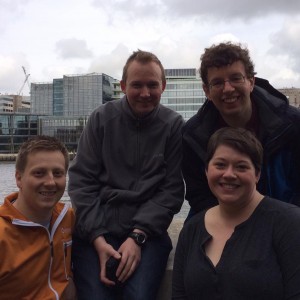
Our DASH 6 London teamDASH 6 was a considerable triumph, both in terms of the global hunt and the London leg specifically. No spoilers about the puzzles, not least because the event will be recast in Minneapolis at the very least, but the puzzles varied from entertaining to spectacular, the production values were very high and most of the puzzles required as much teamwork as you would hope for. London had a total of 21 teams over the two senior tracks, up from last year’s eight. The weather broadly held with only the fewest spots of rain, contrary to predictions of persistent showers all day at the least. Our GC team did a great job too. Indications are that the Magpie team won the London leg again, as expected; many congratulations to them! ClueKeeper was also a big winner on the day; a couple of teams reportedly had obvious glitches with no impact on gameplay but the system lived up to its potential.

If you care, our team had an excellent day and I think we performed competitively. We were very slow between locations (at the risk of TMI, I must have visited the little solver’s room ten times today in all the excitement, quite possibly fifteen) and so were left with a real rush against the eight hour deadline for the metapuzzle at the end, but we took hints with about six minutes to go and cracked it with maybe 31 seconds left on the clock!

Thanks to our GC, to the global co-ordinators, to all the puzzle authors and to all the lovely people I met (and solved with!) today. The post-DASH comedown is painful, but at least we know that a DASH 7 global co-ordinator has been named, so back to looking out for information again…

The DASH 6 preview continues: links and predictions

DASH "sugar lump"I make no apology for the number of posts about the upcoming DASH 6 puzzle hunt in London next Saturday, which should be one of the highlights of the puzzling year. It’s very close and I’m very excited. If you’re excited too, you may well enjoy Clavis Cryptica‘s preparation tips document from last year; good advice like that never goes out of style.

Let’s next talk about the organisers. The DASH Facebook group has been running a series of “Better Know A City GC” (Game Control) mini-interviews with the teams in charge around the world, with the London organisers being interviewed about a week ago. In order of publication, you can see what Jordan, Lisa and Ronald had to say. Additionally, if that’s not enough, the London Street Games blog has a longer interview with Jordan.

Finally, let’s make some predictions:

  1. The prediction most likely to be accurate of all is the one made with the assistance of science; we’re within medium-range weather forecast territory. The BBC make this prediction (showery with sunny intervals), MetCheck make this prediction (showery in morning, rainier later) and forecast.co.uk make this prediction (showery).
  2. I’m going to predict that this event will be relatively long, and relatively construction-heavy (which is slightly different from saying relatively difficult). I’m going to base this on the individual locations’ posted predictions that this will likely be a long-ish hunt and the mail from London GC.
  3. Some previous DASHes have had nationwide clues, often with interaction between teams on Twitter. Some years even had the motif that all the teams would start at the same time – so around 9am Pacific on the West coast, or around midday Eastern on the East coast. (Or, perhaps, 5pm UK time, leading to the hunt running through the night!) As most locations are starting around 10am local time, I don’t anticipate that the same thing will be happening this year – at least in that way. Perhaps the DASH organisers have something more cunning up their sleeve!
  4. I’ll also predict that the code sheet will contain something unusual this year, and the unusual content will be used. Looking at past years’ code sheets, I would consider morse, semaphore, braille, binary and phonetic alphabet codes to be usual, maybe also hexadecimal. If anything else crops up, I’d consider it suspicious and proactively look for opportunities to use it!

One week to go until DASH 6 in London

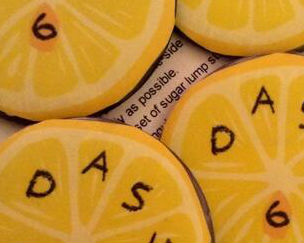
DASH 6 lemon logoToday is Saturday 19th; in seven days, it will be Saturday 26th, which is DASH day in London and a dozen cities across the United States. Registration is essentially over, with a few cities operating waiting lists, but nothing more; at this point, if you’re looking for a team, you’re probably better off contacting local Game Control and asking if they know of any teams looking for another member. (In London, I might be able to help.)

For an event with around 300 teams taking part around the world, some might expect there to be more fannishness about it – more celebration of it as a competition. Looking at the scoreboards from DASH 4 and DASH 5, a team called STDP are two-time defending champions (possibly US champions from DASH 4 and world champions from DASH 5). Yet perhaps they should be better celebrated for having run the Boston event in DASH 3! This DASH 2 report names the STDP team from that event, and it seems quite plausiable that they might have chosen not to change a winning formula.

I know a little more about the London teams. At DASH 5 in London, there were six teams playing the Experienced track; four of the six finished well in the top 25% globally. The London teams were particularly quick at Puzzle 4, Find Patient Zero (solution), possibly because of strong similarities to the Only Connect TV show broadcast in the UK but not in the US. This year, I expect something like 18-20 teams in London, maybe slightly more; I’m not going to make wild claims about how well teams will do, but I reckon London will be overrepresented in the top third globally again. I also have some thoughts how the London event might play out.

Probably the majority of subscribers to The Magpie (as recently discussed) would enjoy DASH, as discussed by Mark Goodliffe after the event; last time I heard, only one team from the magazine will be appearing in London to defend their London title, but there could well be others. The more crossword-heavy the event, the more strongly they must be favoured, though they’re far from a crossword-only team, and very far from a cryptic-crossword-only one, and with greater experience they could be global podium contenders on their day.

I will be on team Riddler on the Hoof again. Sadly we have lost some very strong team members from last year, one of whom will be co-running the London event this year, but on the other hand we have picked up some very strong new team members. I reckon that the standard gets stronger every year, with more strong new teams finding out about the event, but I think this year we will have more familiarity and confidence; hopefully this will translate into speed.

Team 2 Jesters, 2 Lesters & Someone from Chester are splitting into three teams this year, each introducing new participants to DASH. One third of the team wrote and ran their own private hunt for a couple of dozen players, and a second of the thirds did extremely well at it. All three thirds have been exposing themselves to plenty of puzzles over the year and all three should be very competitive.

The Moore or Lesk team, this year, may also include additional representatives from the UK Puzzle Association forum. While the London Puzzled Pint is not yet really mature enough to have the same team names from month to month, the UKPA team and other teams featuring UKPA team members have done well frequently. I don’t know who the line-up will be, but they’re sure to be a very strong team – and, if DASH 6 turns out to be logic-heavy, an extremely strong team.

Another exciting thing is that there’s got to be a very good chance that there could well be another extremely strong team, or several other extremely strong teams, in London who didn’t play last year and spring a surprise. I hear that there may be a team of David J. Bodycombe and the QI Elves, who would be remarkably strong. Likewise, if there were a team of members from the Armchair Treasure Hunt Club, or maybe veterans of CGI’s own armchair treasure hunt, you’d have to fancy their chances, simply because of the number of puzzles they’ve seen over the years. Or perhaps a door in a wall members could put their years of experience to good use, or…

Up with The Larks

"The Larks" logoManchester group The Larks, formerly known as Larkin’ About, have produced what they describe as “unexpected blends of gaming, interactivity and the theatrical” since 2010. I particularly enjoyed reading about their 2011 Treasure Hunt project in Bristol and Cardiff, Gate Crash; in 2012, I was very disappointed to have to miss the presentation of their work at the local Stockton International Riverside Festival.

More recently, The Larks had a Cornerhouse microcommission at The Point in Eastleigh, where they spent six days developing a project entitled Escape, that bears a considerable degree of similarity to the exit games we know and love. Their progress is described in this Development blog and summarised in the following video:


Their Twitter feed suggests that they are continuing to work on the project (for instance, The Larks’ events page suggests they had a playtest last Tuesday, so look out for further playtests in the future) and I look forward to seeing it come to fruition. With their considerable experience, they could well produce something spectacular, theatrical and distinctive.

The Larks’ Twitter feed is also well worth following for the other links they post; they recently linked to ticket sales for Silent State, coming up in Wrexham on Saturday 10th May. “Music has been banned in the town of Wrexham and silence ensues. The town is now a very different place […] being caught in possession of musical artefacts of any kind comes with a very high price. But there is hope….rumours are spreading behind closed doors of a resistance. […] Silent State is a roaming theatre game and is a mixture of puzzles, music, intrigue and theatrical happenings. The event plays out on the streets of Wrexham town centre and requires participants to move between several locations on foot. Participants will be placed in groups of six – you can come as a ready made group or we can match you up with other players on the day.” The event lasts 1½ hours, will be run three times on 10th May and tickets are a very reasonable £5 per player. The video on the ticket sale page is well worth a look.

London puzzle hunt theatre: “a door in a wall”

"a door in a wall" logoThe process of learning about new projects is exciting: a passing mention of something unfamiliar in a Tweet here or there, which leads to something unknown to explore. Sometimes you turn up something very exciting that you never knew about. Maybe it’s an exit game, maybe it’s a contest, maybe it’s something like this.

Since 2008, event company a door in a wall have been organising treasure hunts and other interactive games, mostly in London. Sometimes they’ve run for a single night, sometimes they’ve been season-long engagements so that people could attend the performance of their choice. I very much enjoyed this photo essay by Alexa Loy of their “Sheikhs on a Plane” game in 2012; it’s clear that some of the clues involve code-breaking or are otherwise explicitly puzzle-y, making them likely to be of interest to readers. Interviews with principal Tom Williams (The Londonist in 2011 and Little London Observationist in 2012) lead me to like the way he thinks.

However, it’s clear that puzzles are only part of the hunt experience; even in Larry Hosken’s notes from Ian Tullis’s recent “Advice for a Puzzle Snob” talk at the 2014 Game Control Summit, “Talk around the water cooler next week will be about a gadget or a location; not about your puzzle“. The reviews for a door in a wall‘s work indicate that their actors, scenarios, locations and interactions are well worth the money. The fact that the same game is being run many times means that many more fixed costs can be amortised per player. (Arguably, it de-emphasises competition, too.)

Coming up in May and June is their new murder mystery game, The Diplomatic Corpse. “In the ever-volatile country of Paudaguay, you’re never too far from danger […] the Paudaguayan ambassador, Emilio Ninkash, has been murdered within his own embassy. […] In this time of peril, will you answer your consulate’s call to investigate the crime, restore tranquility to our diplomatic community, and bring the killer to justice?” The game will run every evening from 2nd May to 15th June, with additional afternoon dates on some days. It’s a game for teams of ideally 3-6, each team with one video smartphone and a willingness to explore central London. Teams can be formed in advance or on the day and up to fifty tickets are sold per show.

Tickets are now on sale. The standard price for a 4½-hour experience is £30 per player, plus booking fees, though there are still a couple of tickets available at £20 per player for the preview show and Twenty Something London have a code for 20% off on the first three Tuesdays.

It’s tempting to consider a door in a wall to be akin to a British Ravenchase, Shinteki or Mastermind Hunts (etc.) with their mix of public and corporate games. Resemblances can also be drawn to the Walking Shadow Company‘s “theatrical game with puzzles” tradition; their Saboteur game is wonderful to read about and I hope their Cabal game makes it to the stage some day soon.

Within two weeks of the DASH puzzle hunt in London and the US

DASH "sugar lump"As previously discussed, the Saturday after next will see the sixth DASH puzzle hunt take place in London and in a dozen cities across the US. We don’t know much about it, though this Tweet from a team running the playtest in Portland inspires the above picture and gets us thinking about “sugar lumps”. Hmm.

The DASH Facebook page has also been running a series of previews of local co-ordinators. Dan Egnor, who has forgotten more about puzzle hunts than I have ever known, has said on Google Plus “This is so gonna be in a puzzle…” – it’s not really the DASH way to feature pre-clues, but there’s always a first time, and nobody ever said “This is not a clue” – so perhaps, just perhaps, never a truer word spoken in jest.

The great scholarly work of puzzle hunt puzzle taxonomy is Joe DeVincentis’ MIT Mystery Hunt Puzzle Index. If ever you want to astound people with the breadth of what can be achieved in a puzzle, that categorises over eighteen hundred of the hardest. In a similar vein – though I must admit insufficient familiarity to be able to use the same categories as Joe – I have attempted a similar analysis on the puzzles of the first five DASH events to date:

2009 Palo Alto: music (identification from audio samples), letter links
2009 Boston: picture identification, poker, indexing
2009 Los Angeles: phonetic letters and numbers (NV = envy or single letters), indexing
2009 Washington DC: poker, indexing, reading vertically
2009 Houston: physical puzzle, paper dolls, logic puzzle based on elimination
2009 Portland: picture identification, westerns, Morse
2009 Seattle: crossword clues, overlapping words, reading last letters
2009 Palo Alto: wordplay induction to deduce hidden rules (sports teams, phonetic letters, A=1 B=2, double letters, phonetic alphabet, identify countries, palindromes)
2009 Meta 1: rock scissors paper, wordplay from puzzle names and answers
2009 Meta 2: semaphore, rock scissors paper, wordplay from puzzle names and answers
2010 Alvin and the Chipmunks: music (identification from audio samples), word rebus
2010 The Brady Bunch: identification of pictures, induction of common themes, sorting, indexing
2010 CSI: Orlando: identification of pictures, Disney movies, sorting, indexing
2010 Late Night with Conan O’Brien: identification of pictures, TV shows, hidden words within quotes, extraction of extraneous letters
2010 Dancing with the Stars: soundalike gibberish, constellations, combining pictures to spell letters
2010 How I Met Your Mother: wordplay linking pick-up lines and logos, braille
2010 LOST: crossword clues, sorting logos based on colour clues, indexing
2010 Star Trek: identification of characters, bases other than ten, arithmetic applied to letter numbers
2010 Twilight Zone (Meta): mapping phrases within answers to buttons on remote control, mapping data to lines to letters, using one physical prop on another built up during the hunt
2011 Snow White: Snow White character names, hidden words within quotes
2011 The Town Musicians of Bremen: music (identification from audio samples), dot-to-dot lines travel over letters
2011 Cinderella: creation of physical prop, recognising physical prop’s ability, identifying common letters in pairs of words
2011 Rumpelstiltskin: trivia questions, picture rebuses, recognising letter shapes
2011 Rapunzel: creation of physical prop, pattern matching, arithmetic applied to letter numbers
2011 Chicken Little: wordplay induction to deduce hidden rules, letter binary code, identifying letter patterns in grid
2011 Hansel and Gretel: wordsearch (slight variant), letters not used in wordsearch, wordplay induction to deduce hidden instruction
2011 Jack and the Beanstalk: creation of physical prop, wordplay induction to deduce hidden crossword clues, crossword clues, word rebus
2011 Three Little Pigs: number logic puzzle, crossword clues, induction of common theme
2011 Meta Puzzle: wordplay induction on previous answers, crossword clues, jigsaw, maze, symbol identification, indexing
2012 Golden Gate Bridge: crossword clues, identification of states, dot-to-dot lines travel over letters, letters not used in grid
2012 Mausoleum At Halicarnassus: wordplay induction to deduce hidden instruction, binary decoding, semaphore
2012 Temple of Apollo at Delphi: crossword clues, triple homophones, indexing
2012 Great Wall of China: identification of pictures, wordplay induction to deduce hidden instruction
2012 Lighthouse At Alexandria: geometry, wordplay induction to deduce hidden instruction, counting
2012 Great Pyramid of Giza: crossword clues, wordplay induction to discover hidden instruction for filling crossword, use of hidden instruction on diagram provided
2012 Statue of Liberty: anagrams, wordplay induction to discover hidden instruction, use of hidden instruction on diagram provided
2012 Tower of Babel: crossword clues, flavourtext induction to discover hidden instruction, rhymes
2012 El Castillo (Meta): creation of physical prop, wordplay induction to discover hidden instruction
2013 Verify the Disorder: sequence dialogue, hidden quotes, foods and words within dialogue, matching to diagrams, recognising letter shapes, dot-to-dot lines travel over letters
2013 Identify the Affected Area: crossword clues, wordplay induction to discover hidden instruction
2013 Discover the Infection: puns, anagrams plus extraneous letters
2013 Find Patient Zero: hidden connections, binary code
2013 Isolate the Infection: mini-puzzles, crossword clues, cryptic crossword clues, hidden words within quotes, anagrams
2013 Determine Transmission: crossword clues, overlapping words, use of physical prop
2013 Develop a Cure: identify pictures, wordplay induction to discover hidden instruction
2013 Plan Distribution Method: identify grid positions, flavourtext induction to discover hidden instructions
2013 Complete the Cure (Meta): wordplay induction on previous answers, creation of physical prop, jigsaw, hidden message

So what can we learn?

  1. DASH is pretty wordplay-heavy compared to many other puzzle hunts, and there have been relatively many “interpret the flavourtext, or the answers, or other wordplay in order to deduce hidden instruction” puzzles over the years.
  2. Common tropes: extracting unused letters from words or anagrams, wordsearches where the unused letters in the grid are somehow crucial, dot-to-dots where things crossed by the lines are crucial, identifying words hidden within phrases or longer pieces of text. The theming is normally pretty important, too. To be fair, none of these are particularly exclusive to DASH.
  3. The meta puzzle often relies on some commonality between the answers, so a really smart team might be able to start to identify that commonality even before they have all the answers, then presume the existence of the commonality in the answers that they have not yet reached. We haven’t had a meta that’s in part to do with the puzzle names for a while, so perhaps that might turn up again before too long.
  4. Some of the earlier DASHes relied fairly heavily on US culture, which I think was dialed down a little for DASH 5 now that the UK has entered the fold – and, given that there’s no reason why it couldn’t spread further around the (at least the English-speaking or English-speaking expat) world, this might decrease further still over time. I get the impression that one concession for London in DASH 5 is that we were presented with a list of US postal state abbreviations that we might not be expected to know but that US solvers might – and if there are any counterparts for further DASHes (lists of state capitols? Lists of Presidents and their numbering?) don’t expect them to be red herrings.
  5. Looking at the scoring, DASH 3 was unusually long compared to the others, with particularly many physical prop construction puzzles that slowed teams down. Another relatively long one may roll round again at some point.
  6. It’s not at all an admission of defeat to take hints; the median teams may or may not take hints, but taking a hint will not necessarily exclude your team from finishing in the top 20% of all teams, or maybe even significantly higher than that – particularly if you’re fast everywhere else in a relatively long year.

Really looking forward to this year’s event, not least to getting to see lots and lots of lovely people in the same place at the same time, even more than at a Puzzled Pint. More on that soon!
Around the World: the South of the US

Map of the South of the USAround The World is an occasional series in which we release the general restriction that this is a site that focuses upon the UK and Ireland.

To untrained eyes, above you have a map of what might look like the south-east of the United States of America. To someone fortunate enough to have married a good woman from the state of Georgia, it’s very much the capital-S South.

Coming up this weekend, in Auburn in the state of Alabama, Eric Harshbarger will be hosting his fourteenth puzzle party, featuring a 16-hour 12-team puzzle hunt on Saturday 12th April – and the first two hours of Sunday 13th! This is the first time he will be permitting remote players; apparently one of the players will be from the UK, though I don’t recognise any names. You might be able to contact Eric to try to participate remotely on a team, particularly if you do recognise a name.

Later, in Atlanta in the state of Georgia, The Game will take place on the afternoon of Saturday 10th May. This team-based hunt, by Out of Hand Theater, sees teams attempt to travel to locations and score points by solving as many puzzles as possible within three hours. One neat twist is that teams solving sufficiently many clues qualify for The Genius Round, where they can attempt to win the grand prize.

Humorist Dave Barry has been organising one-day in-person puzzle hunts for thirty years. From 1984, they were published in Tropic, the Sunday magazine of the Miami Herald newspaper and accordingly known as “the Tropic Hunt”. Tropic magazine closed in 1998, but the Herald restarted the tradition as “the Herald Hunt” in 2001, and most years have seen a hunt since. There wasn’t one in 2013, and no date has been announced in 2014, but since 2008, Barry has organised the Post Hunt, published in the Washington Post, in Washington, DC. A mere five or ten thousand hunters are expected for the next event on Sunday 1st June. Andy Wenzel’s archives are the best place to look for information.

Further afield, Ravenchase Adventures run hunts all over the South. Some of them are walking events entitled “Pubs and Puzzles races”, others are the A.R.K. Hunts where the A.R.K. refers to the Act of Random Kindness that must be paid as the entry fee, and many more. The highlights include the annual Great Virginia Race, whose ninth edition is on the weekend of 24th-25th May, and the third annual Great America Race. This latter event is among the most ambitious of them all; lasting 5-8 days, teams can expect to have a hunt to solve in a different city each day, often with a drive from state to state in between. I loved this travelogue with an account of the 2013 event!

Lastly, for tribal reasons as well as for temporal ones, the University of South Carolina have run their own puzzle hunt in each of the last three years. Puzzles and metapuzzles are released each day, with an intricate system of puzzle answers clueing higher-level puzzles and so on. The event starts in late March each year and the puzzles from the just-finished 2014 edition have been published.